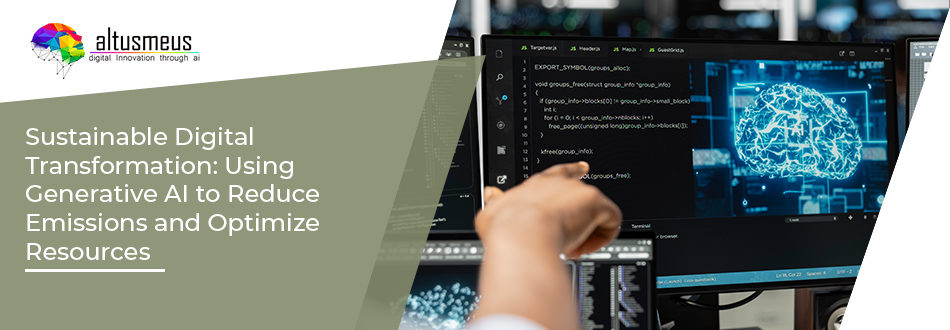
Digital transformation is no longer only about speed, automation, or profit margins. Today, it is also about responsibility. Companies are under pressure from regulators, investors, and customers to operate in a more sustainable way. Carbon emissions, energy consumption, waste generation, and inefficient resource usage are no longer side issues. They directly affect brand reputation, compliance status, and long-term competitiveness.
Sustainable digital transformation means using technology not just to grow faster, but to grow smarter and cleaner. It is about redesigning processes so that operations become efficient while environmental impact is reduced. For modern enterprises, this is not optional. Sustainability reporting is becoming stricter, ESG expectations are rising, and operational inefficiency now carries both financial and environmental cost. This is where generative AI becomes more than a productivity tool. It becomes a sustainability driver.
Generative AI as a Catalyst for Sustainable Transformation
Generative AI, popularized by platforms such as ChatGPT developed by OpenAI, has proven its ability to automate content creation, coding, analysis, and decision support. But its deeper value lies in optimization.
At an enterprise level, generative AI can help companies analyze massive operational datasets and generate recommendations that reduce waste and improve efficiency. It can simulate scenarios, model resource allocation strategies, and suggest smarter ways to manage supply chains, logistics, and production cycles.
For example, in manufacturing, AI models can analyze production schedules and energy usage patterns to identify inefficiencies. By optimizing machine run-times and predicting maintenance needs, companies can reduce energy waste and extend equipment life. In logistics, AI can optimize route planning, reducing fuel consumption and emissions. In office environments, AI systems can analyze energy usage trends and recommend automated adjustments that lower electricity consumption.
The impact compounds over time. Small percentage improvements in efficiency, when applied across large operations, result in significant cost savings and measurable emission reductions.
Optimizing Resources Through Intelligent Automation
Sustainable digital transformation is not only about cutting emissions. It is also about using resources more intelligently.
Generative AI can assist enterprises in:
- Improving demand forecasting so overproduction is minimized.
- Reducing raw material waste through predictive planning.
- Optimizing workforce scheduling to reduce unnecessary operational overhead.
- Enhancing procurement strategies by analyzing supplier sustainability metrics.
When AI systems are integrated with ERP and supply chain platforms, they can continuously evaluate performance and suggest improvements. Instead of reacting to inefficiencies after they occur, companies can proactively prevent them.
This shift from reactive management to predictive optimization is where real sustainability gains happen.
Emissions Reduction Through Data-Driven Decisions
Many organizations struggle with carbon accounting because their data is fragmented. Generative AI can help consolidate data from different systems and generate comprehensive sustainability reports aligned with ESG frameworks.
More importantly, it can identify emission hotspots within operations. Whether it is excessive energy use in a facility, inefficient transport routes, or outdated infrastructure consuming unnecessary power, AI models can highlight where intervention will have the greatest impact.
Companies that combine AI-driven analytics with operational changes often see measurable reductions in energy costs and carbon output within a short timeframe. Over the long term, these improvements contribute not only to environmental responsibility but also to stronger financial performance.
Sustainability and profitability are no longer opposing goals. With the right digital strategy, they reinforce each other.
Building a Practical Path to Sustainable Transformation
However, adopting generative AI without structure can create complexity instead of clarity. Sustainable transformation requires a strategic framework:
- Clear sustainability goals aligned with measurable KPIs.
- Reliable data infrastructure to ensure accurate analysis.
- Secure AI integration across operational systems.
- Continuous monitoring and optimization rather than one-time deployment.
Technology alone does not create sustainability. Structured implementation does.
The Role of Altus Meus
At Altusmeus, we approach sustainable digital transformation as both a technology challenge and a strategic responsibility. Our focus is not simply on implementing AI tools, but on designing intelligent systems that reduce environmental impact while strengthening operational efficiency.
We work with enterprises to assess their current digital maturity, identify emission-heavy processes, and deploy generative AI models that optimize resource allocation, energy usage, and operational workflows. Our solutions are built with compliance, scalability, and measurable ROI in mind.
Sustainability initiatives must demonstrate value. When emission reduction aligns with cost optimization and performance improvement, transformation becomes sustainable in every sense of the word. Altusmeus helps organizations move from sustainability discussions to sustainability execution.
Conclusion
Sustainable digital transformation is becoming a defining factor for modern enterprises. Companies can no longer afford inefficient systems that waste resources and increase emissions. Regulatory pressure, stakeholder expectations, and competitive dynamics demand smarter operations.
Generative AI provides the analytical depth and automation capability required to optimize processes, reduce environmental impact, and improve financial outcomes simultaneously. When implemented strategically, it turns sustainability from a compliance obligation into a growth opportunity.
Enterprises that integrate generative AI into their sustainability roadmap will operate leaner, cleaner, and more competitively. With the right partner and a structured approach, sustainable transformation becomes not just achievable, but measurable. Altusmeus is committed to helping organizations build that future responsibly and intelligently.