Humans have always worked alongside technology. From the moment early tools like hammers and knives appeared, work became faster, safer, and more repeatable. Each major shift in tools reshaped how people worked. The iron age brought stronger tools. Industrial machines multiplied physical effort. Computers reduced manual calculations. The internet connected people, information, and markets at scale.
AI is the next step in that long story. What makes AI different is not just speed or automation. It is the first tool that works with human thinking, not just human hands. This is why the workforce today is becoming truly digital. Humans and AI are no longer operating in separate lanes. They are collaborating, shaping how modern businesses function and how future ones will be built.
From Tools to Partners in Work
Traditional tools help people do tasks more efficiently. A spreadsheet helps organize numbers. A design tool helps visualize ideas. These tools are powerful, but they depend entirely on human input and direction. AI changes this relationship.
Instead of waiting for step-by-step instructions, AI can analyze, suggest, generate, and adapt. It can process large amounts of information, identify patterns, and offer options that support human decision-making. The human still sets direction, context, and judgment, but AI actively contributes to the process. This is the foundation of the new digital workforce.
How Humans and AI Co-Create in Business Today
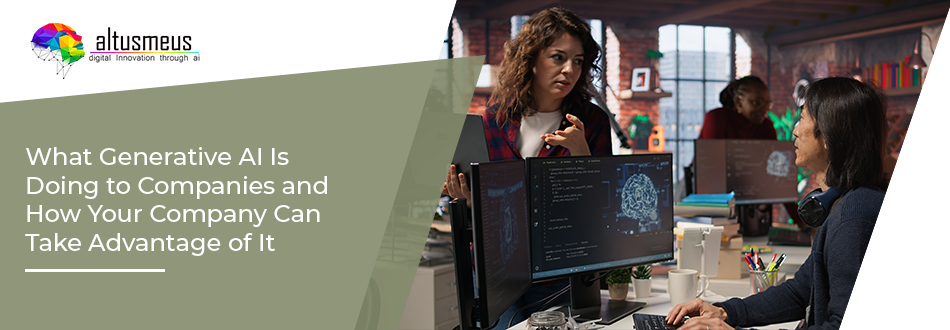
Co-creation does not mean replacing people. It means dividing work differently.Humans bring context, creativity, ethics, and strategic thinking. AI brings speed, scale, consistency, and analytical depth. When these strengths are combined, work changes in meaningful ways.
Product teams use AI to explore concepts faster and test ideas early. Designers collaborate with AI to generate variations and refine details. Analysts work alongside AI to uncover insights that would take weeks manually. Leaders use AI-supported analysis to make clearer, more informed decisions. In each case, AI does not act alone. It supports human intent and amplifies human capability.
Why This Shift Matters for the Future of Business
As markets move faster and complexity increases, businesses cannot rely solely on traditional workforce models. Decisions need to happen sooner. Ideas need to be tested earlier. Teams need support, not overload.
The human–AI workforce helps address these pressures. By reducing repetitive work and improving clarity, AI allows people to focus on higher-value thinking. It also helps organizations respond more quickly to change, because insights and outputs are generated in real time rather than after long cycles. This combination of human judgment and AI assistance is shaping how competitive advantage is created.
Building a Workforce That Works With AI, Not Around It
One challenge many organizations face is integration. AI tools are introduced, but workflows remain unchanged. As a result, AI feels like an add-on instead of a collaborator.
To unlock real value, businesses need to rethink roles, processes, and responsibilities. People need to understand how to work with AI, not just use it occasionally. This requires training, clear use cases, and alignment with business goals. When done well, the workforce becomes more flexible, more informed, and more capable.
How AltusMeus Supports the New Digital Workforce
AltusMeus works with organizations that want to move beyond experimentation and build practical human–AI collaboration.
The focus is on helping businesses design workflows where AI supports real work. This includes identifying where AI can assist teams, integrating it into existing processes, and ensuring people understand how to use it effectively.
Rather than treating AI as a separate initiative, AltusMeus helps embed it into how teams operate day to day, so collaboration between humans and AI feels natural and productive.
We help companies with AI-powered digital transformation that takes their business to the next level.
Conclusion
The future of business is not human versus AI. It is human with AI. Just as tools from earlier eras reshaped work, AI is redefining how value is created today.
By combining human insight with AI’s analytical and generative strengths, businesses can move faster, think clearer, and adapt more easily.
Organizations that embrace this new digital workforce are not replacing people. They are enabling them. Over time, that partnership will define how the most resilient and forward-looking businesses are built.